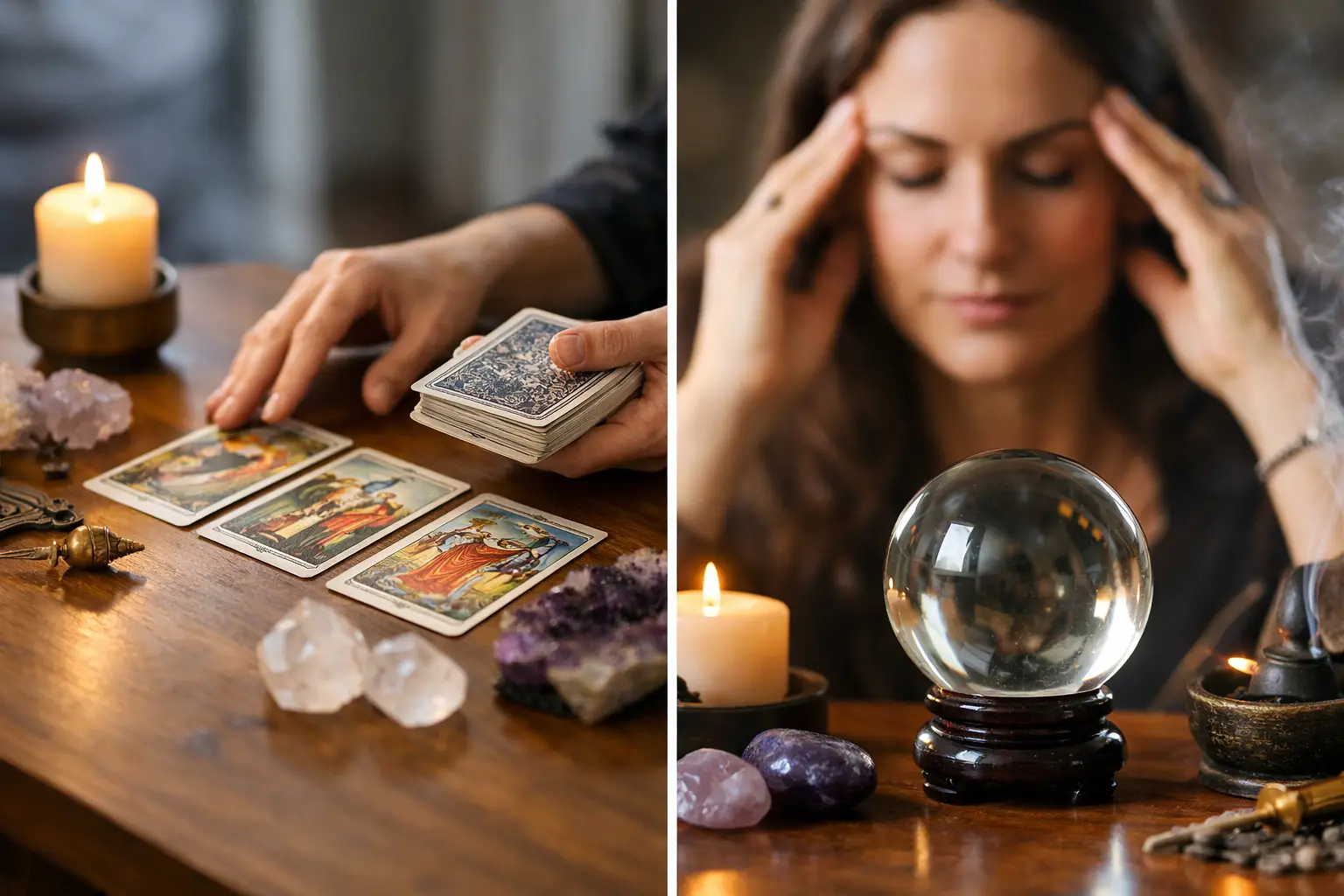
You do not need more vague advice when your heart is on the line. If you are trying to understand tarot reading vs psychic reading, the real question is simple: which kind of session will give you the clearest answers for what you are facing right now?
That distinction matters more than most people realize. Some clients come in wanting direct intuitive truth about a relationship, a breakup, a career shift, or a decision they have been avoiding. Others want the structure and symbolism of the cards to help them see what is unfolding. Both can be powerful. Both can be accurate. But they work differently, and choosing the right one can make your reading feel far more meaningful and useful.
Tarot reading vs psychic reading: the core difference
A tarot reading uses a deck of cards as a spiritual tool. The cards create a visual language that helps reveal:
- Patterns
- Influences
- Hidden emotions
- Timing
- Likely outcomes
A skilled reader does not just recite card meanings. She interprets how the cards speak to your specific energy, question, and life path.
A psychic reading relies primarily on intuitive ability rather than cards. The reader may receive impressions through clairvoyance, clairaudience, clairsentience, or strong spiritual knowing. In a psychic session, messages may come through quickly and directly, without the structure of a spread or the symbolism of tarot imagery.
In plain terms, tarot often shows the story, while psychic reading often speaks the message. One is not automatically better than the other. It depends on how you process guidance and what kind of clarity you need.
What a tarot reading is best for
Tarot is especially helpful when your situation has layers. If you are asking about a complicated relationship, a repeated emotional pattern, or a crossroads with several moving parts, tarot can bring order to the chaos. The cards can show what is visible, what is hidden, what energy is leaving, and what is trying to emerge.
For many people, tarot feels grounding because it gives the reading a clear shape. You can see the cards, understand the themes, and follow the logic of the message as it unfolds. That can be very comforting when you are overwhelmed or emotionally raw.
Tarot is also useful for clients who want both spiritual insight and reflection. A card like The Tower may point to sudden upheaval, but in the hands of an experienced reader, it can also show where your life is being cleared for something more aligned. A card like The Lovers is not always just romance. It may speak to values, choices, emotional truth, or the kind of connection your soul is ready for.
If you want a reading that helps you process a situation, understand the energy around it, and receive guidance in a more symbolic way, tarot may be the better fit.
When tarot may feel more accurate
Tarot often feels strikingly accurate when you need validation about a pattern that has been repeating. The cards can name dynamics you have sensed but could not fully articulate. They can also help answer questions like why this keeps happening, what role fear is playing, and what energy is blocking movement.
That does not mean tarot is only analytical. It can be deeply emotional and spiritual. But it tends to reveal truth through images, archetypes, and energetic storylines rather than through blunt statements alone.
What a psychic reading is best for
A psychic reading is often the better choice when you want fast, direct insight. If you are asking, “Does this person still love me?” “Is this job opportunity right for me?” or “What am I not seeing?” a psychic reading can cut straight to the heart of the matter.
This kind of session can feel deeply personal because the information comes through intuitive connection rather than through cards. Many clients describe it as being seen at a soul level. The reader may pick up on your emotional state, another person’s intentions, spiritual blocks, timing, or likely developments ahead.
Psychic readings are especially powerful when you want truth without a lot of interpretation. For someone in heartbreak, confusion, or urgent decision-making, that directness can bring immediate relief. Instead of circling the issue, a gifted psychic can often identify the energy quickly and tell you what is real, what is changing, and what to prepare for.
This is also why experienced psychic readers are so valued. Intuition without depth can become guesswork. True psychic ability, combined with years of reading people through love, loss, career shifts, and emotional healing, tends to produce the kind of accuracy that clients remember.
Tarot reading vs psychic reading for love and relationships
Love is where people most often feel torn between the two. If you are dealing with mixed signals, separation, betrayal, reconciliation, or a karmic connection that will not let go, both types of readings can help, but in different ways.
Tarot can map the relationship dynamic beautifully. It can show whether the bond is balanced, what each person is feeling beneath the surface, what lesson is repeating, and where the connection may be heading. It gives context. It reveals emotional patterns and relationship roles with unusual clarity.
A psychic reading, on the other hand, may give you more immediate answers about the person’s energy, intentions, honesty, and emotional availability. If what you need most is direct confirmation, psychic insight may feel more satisfying.
If you are asking whether someone is coming back, tarot may show the path and emotional conditions around that possibility. A psychic reading may tell you more plainly whether that return feels likely, delayed, or spiritually unwise. Neither approach is wrong. They simply illuminate different parts of the truth.
Which reading is better for career and life decisions?
When it comes to career, money, and practical next steps, the best choice often depends on whether you need strategy or instinct. Tarot can be very helpful for decision-making because it compares energies. It can show what each path carries, where opportunities are strongest, and what hidden factors may affect the outcome. If you are choosing between jobs, considering a move, or trying to understand why progress feels blocked, tarot can organize the picture.
Psychic reading can be stronger when the question is more intuitive in nature. You may already know the facts and still feel unsettled. In that case, a psychic session can help you sense whether an opportunity is aligned, whether someone around you can be trusted, or whether a delay is actually protection.
People often think spiritual guidance is separate from practical guidance. It is not. The most meaningful readings help you feel both spiritually supported and emotionally clear enough to act.
Can a reading be both tarot and psychic?
Yes, and often that is where the deepest clarity happens. A truly gifted reader may use tarot as a doorway while also receiving psychic impressions beyond the cards. In that case, the cards confirm the energy while intuition sharpens the message.
This blended approach can be ideal if you want the best of both worlds: the visible structure of tarot and the direct truth of psychic insight. It can also make a reading feel more complete, especially if your situation is emotionally charged and time-sensitive.
At The Psychic Queen, this is often what clients are really looking for – not just labels, but clear answers delivered with compassion, accuracy, and spiritual depth. When someone is hurting or stuck, they want guidance that feels honest, personal, and immediately useful.
How to choose the right session for you
If you feel drawn to symbols, patterns, and a fuller story, tarot is likely the better choice. If you want direct answers, energetic truth, and strong intuitive impressions, psychic reading may be the stronger fit.
If you are highly emotional and need grounding, tarot can help slow things down and make the message easier to absorb. If you are trapped in overthinking and need someone to cut through the noise, a psychic reading may bring faster relief.
It also depends on your question. A broad life transition may benefit from tarot. An urgent question about a person’s intentions may feel more satisfying in a psychic session. And if you are open to both, a combined approach can be incredibly powerful.
The most important thing is not choosing the trendier label. It is choosing the kind of guidance that meets you where you are. When you are facing heartbreak, uncertainty, or a decision that could change your life, the right reading should do more than impress you. It should bring clarity, calm your spirit, and help you trust your next step with greater peace of mind.

Written by The Psychic Queen
Clairvoyant psychic, tarot reader, psychic medium, and life coach with 25+ years of full-time experience and 50,000+ readings given. Former host of a psychic TV show on Metro ACCESS TV, NYC, for 7 years.